Dear Friends,
Have you ever thought of life as a great journey? There are moments of joy, discovery, plans… and then, suddenly, unexpected obstacles appear: pain, illness, loss, and even the inevitable certainty of death. These moments shake us and make us ask: What is the point of all this?
The film “The Bucket List” shows us precisely that through Edward and Carter. Two very different men who, knowing they have little time left to live, decide to embark on an adventure. At first, their idea is to cross things off a “bucket list.” But, without realizing it, that list leads them to something much bigger: to find true meaning in what they have left to live. Edward, a loner, rediscovers the value of family. Carter, a family man, dares to pursue dreams he had put aside. The pain of their illness, although terrible, becomes a catalyst for transforming their lives.
This connects us directly to a fascinating thinker, Viktor Frankl. He not only studied pain; he experienced it firsthand in concentration camps. And there he discovered something amazing: those who survived were not always the strongest, but those who found a purpose, a reason to keep going. For Frankl, human beings do not seek happiness as an end in itself, but rather happiness comes “as a bonus” when we have found meaning in our existence.
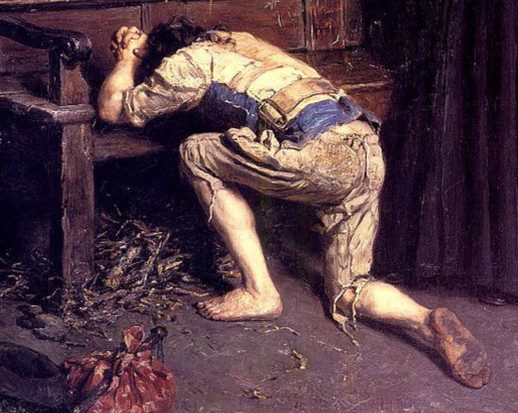
Pain, Frankl tells us, can be like an “alarm.” It forces us to stop, to reflect, to realize that perhaps we were pursuing things that were not the most important. Think of the mother who, after losing a child, found a renewed purpose in caring for her other child, finding peace in that inevitable suffering. Or the doctor who accepted his grief as a sacrifice for his loved one, giving meaning to his sorrow.
Frankl’s phrase sums it up: “If you cannot change a situation that causes you pain, you can always choose the attitude with which you face that suffering.” Our attitude changes everything. It allows us to mature and find an inner freedom that no one can take away from us.
And death, what role does it play in all this? For Frankl, death is not the end of everything, but rather gives life itself a framework and meaning. Knowing that we are finite pushes us to live more intensely and authentically. If life had no end, we could put everything off, and that would take away the urgency and value of each moment. The awareness that one day we will depart drives us to seize every moment and be responsible for what we do with our time.
Now, let’s add the perspective of C.S. Lewis. From his Christian faith, he helps us understand pain not only as a human experience, but as part of a divine plan. For Lewis, if God is good and all-powerful, why does he allow suffering? His answer is key: God’s love is not a “soft” love that only seeks our comfort. It is a love that seeks our perfection, that wants us to be better. Sometimes, in order to mold us and make us grow, that love allows us to go through the fire of pain. Lewis calls it “God’s megaphone to wake up a deaf world.” It is the way He gets our attention when we have strayed, when we need to recognize our faults and seek Him.
So, the big lesson is this: both Frankl and Lewis, despite their different approaches, agree on something powerful: pain and death are not the end of the road, much less meaningless experiences. On the contrary, they can be the most difficult steps, but also the most important ones, for our personal and spiritual growth.
“The Bucket List” shows us that what we experience, our actions, and above all, how we face our sufferings, remain with us, endure, and transcend. It is not about seeking suffering, not at all! It is about facing it with the best possible attitude when it comes, with dignity, or for the love of God, completing, as St. Paul says, “what is lacking in the passion of Christ” and seeking the meaning it truly has. Because every choice, every step, no matter how painful, brings us closer to a fuller life and the hope of something that transcends this world.
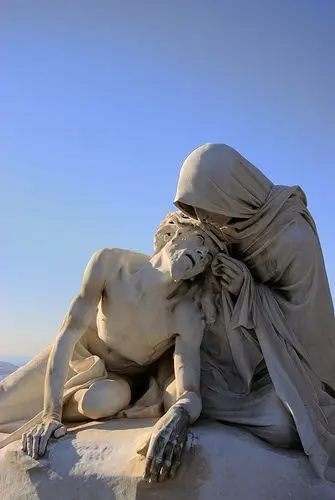
Let us think like true children of God: “Why this suffering? What good can pain and sorrow do for Christians? Why must we carry the death of Jesus within us? Because the Cross of Christ must be proclaimed in the world, not only with words, but also with deeds. Christians are a living proclamation of the crucified and risen Lord. If, as St Paul says, we only want to ‘know Christ Jesus, and him crucified’ (1 Cor 2:2), we must live this out in our whole being. Not only in our spirit (through meditation on the passion of Christ), but also in our body, through the insults, persecutions and afflictions we experience for the name of Christ. In this way, Christ associates us with his passion, and the sufferings we encounter in our Christian life make us living and powerful witnesses of the Crucified One.”1
As Frankl himself said: “Death can only cause fear in those who do not know how to fill the time they have been given to live.” And as has been rightly pointed out: “Learn to live and you will know how to die well.”
Alejandra Ruiz,
Master’s Degree in Marriage and Family and Bachelor’s Degree in Family Counseling. Member from the Academy Pharus. pharuspsy.org
Bibliography
Frankl, V. Man’s Search for Meaning.
Frankl, V. The Suffering Man.
Gelabert Ballester, M. Is something missing from the Passion of Christ?
Lewis, C S. The problem of pain.
Film “The Bucket List” (2007) starring Morgan Freeman and Jack Nicholson.
* Texts were translated by the editor
- Gelabert Ballester, Martín. OP. Le falta algo a la pasión de Cristo? https://nihilobstat.dominicos.org/articulos/la-falta-algo-a-la-pasion-de-cristo/ Recuperado el 15/7/2025 ↩︎
Discover more from Friends of the Cross
Subscribe to get the latest posts sent to your email.