The symbol of our faith is the cross. Those who do not know who Jesus Christ is, such as his life, passion, and resurrection, may rightly exclaim, “How horrible!” We, who know who is that Christ fixed on the cross, will say, “Look how much he loves us!”
Today, many only want to speak of the risen Christ and forget Calvary. They forget that He said to us, “And I, when I am lifted up from the earth, will draw all people to myself.”[1] He did not say this from His glorious state; He was speaking from the cross. It is His Passion that exerts this magnetism that cannot leave us indifferent.
Jesus does nothing in vain; his whole life is a perfect teaching: “I am the way, and the truth, and the life.”[2] If He chose the cross, then this is the way.
Without Christ, the cross is ignominy, shame, and/or punishment. For this reason, it was used as a deterrent for serious crimes, since it is a slow and horrible death. But (Christ says) “Behold, I make all things new.”[3] We must therefore long to discover that newness, the mystery, the wisdom it hides . . . The saints desired the cross, they asked the Lord for it, and all suffering became small to them. They discovered the treasure that was hidden from view.
Most of us still see the cross as a heavy burden; we resist when we encounter it and so often shy away from it. But we believe; we believe that it is the way and that it hides immense treasures. We desire to love it as Jesus did, as the saints imitated him. So, take heart, we have a good destination!
What we feel before the cross is one thing, what we believe is another. Faced with Jesus, a wounded on the cross, our eyes resist; we do not want to look at him. However, the centurion exclaims, “Truly this man is the Son of God.”
St. Bernard, in his Commentary on the Song of Songs, wonders why this man recognises him even against all appearances, hanging as Jesus was between criminals, deformed and abandoned.
The centurion was standing in front of him, and when he saw that he had expired with that cry, he recognised him[4]. He believed what he heard and (not because of what he saw) recognised the Son of God.
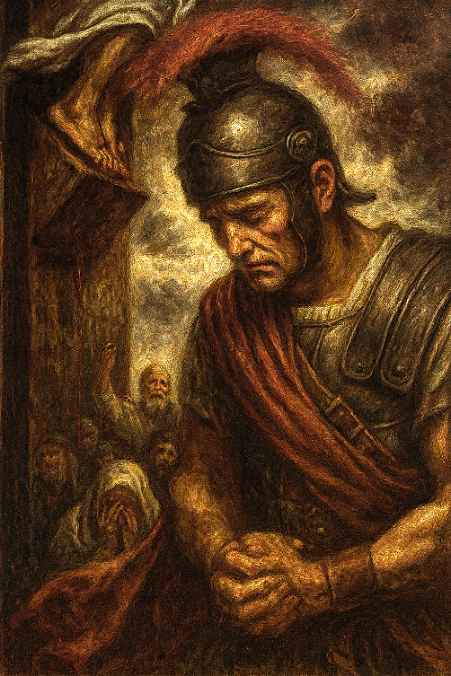
“The ear hears what the eyes cannot perceive. Appearance betrayed the eyes; truth penetrated the ear. The eyes denounced his weakness, his deformity, his misery, his condemnation to the gallows. The ears recognised him as beautiful and the Son of God.”[5]
“The centurion did not despise what he saw, because he believed what he did not see. But he did not believe because of what he saw, but undoubtedly because of what he heard, for faith follows the message.”[6]
Believe first, then understand.
We believe that the hidden in the cross are immense treasures. We know (because Christ told us) that the cross is the way to follow Him. “If anyone wishes to come after me, he must deny himself and take up his cross and follow me.”[7]
Understanding this fully and seeing it with the eyes of the soul will be the reward for faithfully believing what we have heard. Our effort must therefore be to open our ears and live according to the truth that faith presents to us. We will become worthy of this vision by knowing how to obey what we have heard. We will confidently contemplate that which, having heard, we obey.
May the truth we have heard penetrate our hearts. May God cleanse our sight, and prepare us for a joyful vision that responds to the desires of our hearts. “Lord, let me see! Let me see what I firmly believe because I have heard it from you.”
The Holy Spirit follows this process in our spiritual formation. If we desire to see Christ, we must first hear him so that we can then exclaim, “What we have heard, we have seen.”[8] St. Bernard tells us, “His splendour is immense, and your weak eyesight cannot bear it. You can hear him, but not see him (…) the ear is the receptacle of the word of God.”[9]
Isaac heard the voice of his son Jacob, which was true, but he felt the arms and smelled Esau. He tasted a goat from home like a deer. His other senses deceived him, but his hearing showed him the truth.
The surest knowledge comes from faith, which embraces what the senses ignore and does not seek experience. It has no limits of the senses or human reason. There are things that our eyes cannot see. We must contemplate the cross with the eyes of the soul, and until they open, we must believe. “Blessed are those who believe without having seen.”[10] Let us possess with greater certainty, let us follow with greater confidence what faith advises us, let us distrust the senses in those things that surpass them. “What the eye has never seen, nor the ear heard, nor any man imagined, faith carries it closed and keeps it sealed within itself.”[11]
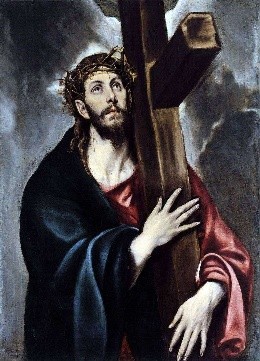
What we now see as vileness, what our senses reject, will become beautiful. “It is deformed to the touch, deformed to the eye, deformed, in short, to your deformity, because you rely more on the senses than on faith.”[12]
Do we want to understand the hidden wisdom of the Cross? Let us believe. Let us believe and God will open our spiritual eyes; let us believe and we will see. Beneath that which frightens the senses, there are treasures and riches beyond compare that we want to discover. Let us believe, and God will show them to us.
It is a grace; let us ask for it every day. Show us, Lord, the wisdom of the Cross; make us desire it as the saints did: AVE CRUX, SPES UNICA!
[1] Jn 12:32
[2] Jn 14:6
[3] Rev 21:5
[4] Mk 15:39
[5] Commentary on the Song of Songs, Saint Bernard, Sermon 28
[6] Ibid
[7] Mt 16:24
[8] 1 Jn 1:1
[9] Commentary on the Song of Songs, Saint Bernard, Sermon 28
[10] Jn 20:29
[11] Commentary on the Song of Songs, Saint Bernard, Sermon 28
[12] Ibid
Discover more from Friends of the Cross
Subscribe to get the latest posts sent to your email.