Dear Friends,
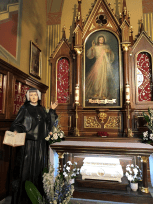
Saint Faustina Kowalska, born in 1905 in Poland, is one of the most important saints of the 20th century. Her life, humble and simple, and her intimate union with Jesus Christ, has left us one of the great devotions centered on Divine Mercy. However, one of the most notable aspects we see in her life, and we can see through her writings, is her relationship with suffering, which she not only experienced intensely, but transformed into a path of holiness and union with God. This letter explores Saint Faustina’s vision on suffering, based on her personal writings in the teaching of the Church, with the intention of offering a reflection that may be of help to those who seek meaning in the midst of pain and trials.
The life of Saint Faustina: a testimony of dedication and suffering
Faustina was born into a humble family and from childhood felt a clear vocation to religious life. She entered the Congregation of the Sisters of Our Lady of Mercy and began to experience physical suffering at a very young age, including painful illnesses that caused her great discomfort.
In addition to physical suffering, Faustina faced misunderstanding and rejection even within her religious community. She faced temptations, doubts, and profound spiritual trials. However, her strength did not come from her own will, but from her total surrender to God’s will and her complete trust in divine mercy.
In her Diary, Faustina writes:
“Sometimes I feel abandoned by everyone, even by God, and yet I know that He will never leave me alone.” (Diary, 32)
This phrase reflects the human experience of suffering and doubt, but also the hope that sustained her.
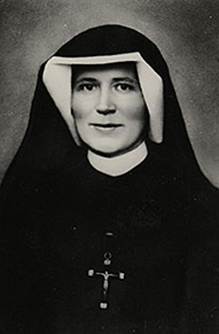
Suffering as a path of purification and union with Christ
For Saint Faustina, suffering is much more than a painful experience; it is a means of participating in Christ’s passion and purifying the soul. She understood that when suffering is offered up with faith, it becomes a form of love and devotion that can transform both the sufferer and the world.
In her Diary, she clearly states:
“Suffering is a gift from God to the soul that wants to be purified. The more the soul suffers, the more it resembles Christ.” (Diary, 402)
“When we accept suffering with love, we collaborate in the salvation of souls.” (Diary, 617)
Her experience of suffering is not passive resignation, but an active acceptance that strengthens faith and generates profound spiritual fruits.
God’s mercy: consolation in the midst of pain
One of Saint Faustina’s most important teachings is that suffering is never separate from God’s love and mercy. In her visions, Jesus showed her how His mercy is the source of comfort and strength for the troubled soul. She wrote:
“In moments of greatest suffering, Jesus said to me, ‘Do not be afraid, I am with you; my mercy is infinite and sustains you.'” (Diary, 173)
This message invites those who suffer to trust that they are not alone, and that their pain is known and loved by God.

Offering suffering for others: an act of love and redemption
Saint Faustina taught that suffering offered to God can have redemptive value not only for oneself, but also for the souls of others. She herself practiced it as a form of intercession and love for her neighbor.
In her Diary she writes:
“I offer my sufferings for sinners and for the salvation of the world.” (Diary, 529)
This attitude transforms suffering into a spiritual mission that transcends personal pain and opens the heart to solidarity and compassion.
Reflection on suffering in today’s world
In contemporary society, suffering is often seen as something to be avoided or quickly eliminated. Medicine, technology, and culture seek to minimize pain at all costs, and suffering is often perceived as a failure or a curse.
The testimony of Saint Faustina invites us to take a deeper look, where suffering is understood in its spiritual and transformative dimension. Her example shows us that, although we cannot avoid or eliminate pain, we can choose how to live it: with despair or with hope, with abandonment or with surrender.
Saint Faustina’s message is especially relevant today, in a world where many people are experiencing personal crises, illnesses, losses, and suffering of various kinds. She invites us to find a source of strength in God’s mercy and to offer our trials as an act of love.
Conclusion
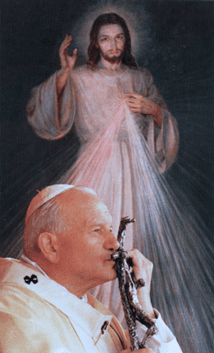
Saint Faustina Kowalska is a shining example of how suffering, when lived with faith and hope, can become a path to holiness and mercy. Her life and writings offer us a testimony of total surrender to God and trust in His infinite love.
Her message continues to be a light for those who seek meaning in the midst of pain and an invitation to experience suffering as a gift which, united with the passion of Christ, can transform lives and save souls. May Saint Faustina, grant us this grace.
Discover more from Friends of the Cross
Subscribe to get the latest posts sent to your email.